

Narendra Modi had stressed need for shifting focus from port development to 'port-led development' model to maximise gains
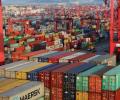
Since January this year, Indian exporters have begun to dread the shipping news. That's because most of it would be about another lot of shipping companies deciding to avoid Indian ports on account of delays.
India's first maritime lender, state-owned Sagarmala Finance Corporation Ltd (SMFCL) hit the ground running with a Rs 4,300 crore disbursement announcement last Tuesday, within months of being registered as a non-banking financial company (NBFC) in June 2025.
The 80-odd projects completed till now are already valued at Rs 14,000 crore.

India will invest USD 82 billion in port projects by 2035, raise share of clean renewable energy source in maritime sector, develop waterways and boost tourism around lighthouses as part of port-led development, Prime Minister Narendra Modi said on Tuesday. Speaking at the Maritime India Summit, he invited global investors to invest in Indian ports, shipyards and waterways. More than 574 projects costing USD 82 billion or Rs 6 lakh crore have been identified for implementation between 2015 and 2035 under the Sagarmala Project, he said. The government, he said, is looking to operationalise 23 waterways by 2030.
The government is planning to set up an integrated transport planning authority for faster and comprehensive planning among multiple transport ministries such as highways, railways, and shipping & ports.

The government is developing ports across the country as centres for green hydrogen production and export, Sarbananda Sonowal, minister of ports, shipping and waterways (MoPSW) said on Tuesday. "Across the country, over 12 million tonnes of green hydrogen-based e-fuel capacity has been announced.
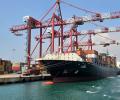
The government is looking to give Bharat Global Ports a certain amount of domestic exposure after it set up the state-owned consortium to increase India's global maritime heft, officials aware of the development said. The intended domestic exposure is meant to give the consortium experience and build its credentials for international projects.

Indian and Russian officials have discussed Indian-Russian cargo transit along the Northern Sea route, joint projects in Arctic shipbuilding and possible training of Indian sailors for polar navigation.
The highest ever average daily construction rate of 130 km has been achieved for rural roads

'Modi knows the people here are opposed to this project, but he is using the might of government to push this port down our throats.'

'All those who participated in the agitation were branded as anti-nationals.'

Modi stressed the need to enhance aviation infrastructure capacity to meet the rising demand for air travel.

He said that as the previous government could not do it, he had to do it.

The total allocation for the road sector has been Rs 97,000 crore.

Fuel cess, TDS on large cash payouts bid to destroy truckers and get foreign players in, says an industry body.
'An area of land has already been earmarked for their protected habitation.' 'There are also steps being taken to take care of the coral zone and mangroves.'

Terming investment in infrastructure "quintessential" to boost growth, the Economic Survey on Friday said post unlocking of the economy, infra sectors are poised for growth and construction of roads is expected to return to the high pace attained before COVID-19. The infrastructure sector will be the key to overall economic growth and macroeconomic stability, the Survey said emphasising that the year after the crisis (2021-22) will require sustained and calibrated measures to facilitate the process of economic recovery and enable the economy to get back on its long-term growth trajectory. "Basic infrastructure facilities in the country provide the foundation of growth. In the absence of adequate infrastructure, the economy operates at a suboptimal level and remains distant from its potential and frontier growth trajectory.

Modi directed strict monitoring of projects, based on monthly completion of targets.

'Earlier compensation was less, but we have increased compensation four fold. As a result, farmers want to give up their land.' 'Infrastructure projects will create 50 lakh jobs. If today we are building 14 km of road per day, by next March, we hope to take it up to 30 km. My own hope is we can take it to 100 km per day.' 'The government's ambitious Sagarmala project aims to develop port infrastructure along the country's 7,500 km coastline. The project includes modernisation of our ports and islands, setting up of coastal economic zones, new major ports and fish harbours.'

Thackeray was speaking virtually after the inauguration of a water taxi service, linking Navi Mumbai to south Mumbai, and the Belapur jetty in the neighbouring township.

The Centre has accorded top priority for cost-effective, pollution-free transportation modes, such as waterways, which reduce logistic costs and increase road safety. Union minister of roads, highways, ports and shipping Nitin Gadkari speaks to Sanjay Jog about the government's strategy.
'Rakesh's life is hard, but he knows how to find joy.' 'He doesn't think his life's value comes from money. He sees no shame in his poverty.'

'The projects that the government started to bring within Goa were totally anti-Goa and anti-people.' 'Can anyone describe a project as development when it is going to cause wanton destruction of people's houses, their surroundings and livelihoods and destruction of forests?'

The infrastructure space was one of the worst victims and things were at standstill.

Modi is keen to get more investments into Gujarat.
Be it roads, railways, ports, civil aviation, energy or electricity, the Narendra Modi govt has invigorated all these sectors since it took over, says Arvind Panagariya.
About railways sector, the Survey said that it is facing stiff competition from other modes of transportation and the government is initiating various transformative measures to keep railways on track.
The minister said apart from the potential of 10 million jobs under Sagarmala, more than 10 million could be easily created in shipping, highways and other sectors

'Good economics isn't necessarily bad politics, or vice versa,' says Shekhar Gupta.

Terming infrastructure as the "backbone" of any nation's development, Goyal while presenting the interim Budget for 2019-20 in the Lok Sabha said India aspires to be a USD 10 trillion economy in the next eight years, and on the anvil is next generation infrastructure of roads, railways, seaports, airports, urban transport, gas and electric transmission and inland waterways.

Once the scheme is implemented 70-80 per cent of the freight would move along national highways as against the current 40 per cent, says Highways Minister Nitin Gadkari.
The thrust will be on improving connectivity in economic corridors and remote and border areas with a view to hike trade and enable faster movement of cargo.

"We are committed to building a new India. We have to do this as early as possible," he said.

Modi, while addressing the 150th anniversary programme of Kolkata Port Trust, invoked Mookerjee and B R Ambedkar and said their contributions had led to the development of the country post Independence, but suggestions made by them were not implemented after they resigned from the government.

Sitharaman said the government also proposes Pradhan Mantri Matsya Sampada Yojana to address critical infrastructure gap in fisheries sector.
Govt to soon appoint consultant to explore opportunities for shortlisted Andaman & Nicobar and Lakshadweep island clusters.
 © 2026 Rediff.com - Advertise with us - Disclaimer - Privacy Policy - Sitemap - Feedback - About us - Terms of use - Grievances